ISO 20022 — The Global Banking Standard That Changes Everything
On November 22, 2025, the old SWIFT system was officially replaced. Every bank-to-bank payment now uses ISO 20022 — a richer, smarter, structured data standard. Eight cryptocurrencies were designed to be compatible. Here is what it means and which cryptos are positioned for the new world.

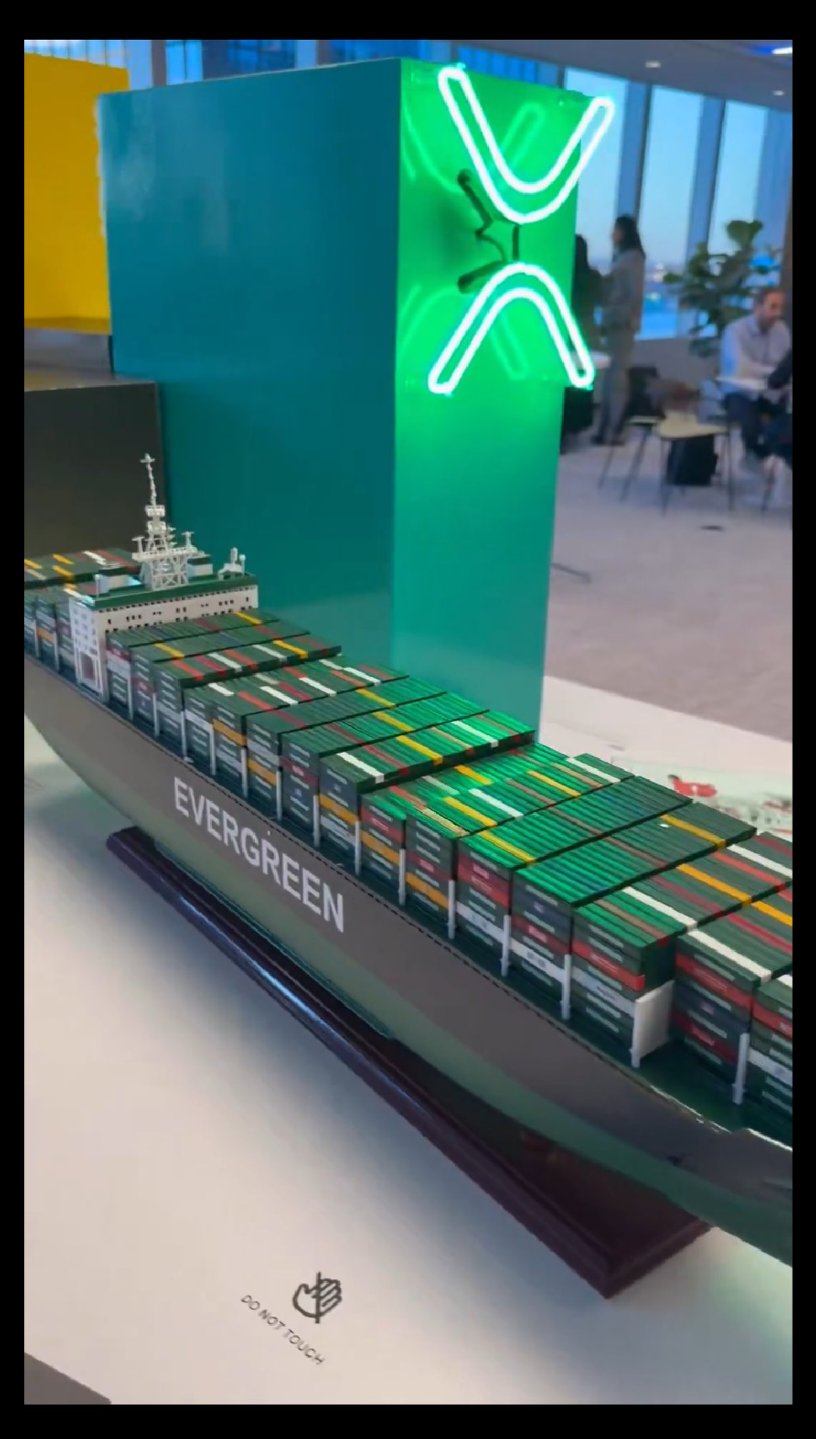
ISO stands for the International Organization for Standardization — a non-governmental body that creates global standards. You already use ISO standards every day: the size of your credit card is ISO/IEC 7810. The shipping container on that Evergreen ship follows ISO 668 — established in 1968, it made modern global trade possible by ensuring every container fits every crane, ship and truck on Earth. ISO 20022 does the same thing for money.
How ISO Standards Changed Global Shipping — And Now Finance
The Evergreen ship photo from Ripple Swell 2025 is a deliberate statement. It represents ISO 668 — one of the most important standards in human history. Before ISO 668 standardized container dimensions in 1968, global shipping was chaotic. Every port had different equipment, loading took weeks. ISO 668 created one universal format. Suddenly, a container loaded in Oslo could transfer to any ship, any crane, any truck anywhere in the world.
"The shipping container did for global trade what the internet did for information. ISO 20022 is the shipping container for money."
What Is ISO 20022? Plain Language Explanation
ISO 20022 is a global standard for how financial institutions communicate about money. The old SWIFT MT system — dating back to the 1970s — used crude, limited message formats. ISO 20022 replaces it with a rich, XML-based format that carries dramatically more information.
Old SWIFT MT → New ISO 20022: What Changed
- Limited data fields — bare minimum info
- No structured beneficiary data
- Manual reconciliation — slow, error-prone
- Compliance checks often manual
- Settlement: 1–3 business days
- Rich, structured data — full remittance info
- Standardized beneficiary, account, purpose fields
- Automated reconciliation — faster, fewer errors
- Automated AML/sanctions screening possible
- Interoperability with blockchain settlement layers
The 8 ISO 20022-Compatible Cryptocurrencies
ISO 20022 is a messaging standard — it does not certify cryptocurrencies. These 8 coins are 'compatible' because their infrastructure supports structured messaging interoperable with ISO 20022. XRP and XLM are the only two that are members of the ISO 20022 standardization body. CoinMarketCap created an official "ISO 20022 Coins" category in late 2025.
| Coin | Status | Primary Use Case | Key Strength |
|---|---|---|---|
XRP |
🌟 ISO Body Member | Cross-borderSettlementBridge asset | 1,500 TPS · 3–5 sec · Sub-cent fees · DTCC integration |
XLM |
🌟 ISO Body Member | RemittancesFinancial inclusion | Low-cost micro-payments · DTCC tokenization H1 2027 |
XDC |
Compatible | Trade financeRWA tokenization | Built specifically for trade finance · Hybrid public/private chain |
ALGO |
Compatible | Enterprise DeFiCBDCs | Pure proof-of-stake · 6,000+ TPS · Used by governments for CBDC pilots |
HBAR |
Compatible | EnterpriseSupply chain | 10,000+ TPS · Governed by Google, IBM, Boeing · Not a blockchain (DAG) |
IOTA |
Compatible | IoTMachine payments | Zero-fee transactions · Tangle DAG · Designed for IoT machine-to-machine payments |
QNT |
Compatible | Interoperability | Overledger OS connects any blockchain · Bridges legacy finance and DLT networks |
ADA |
Compatible | Smart contractsDeFi | Research-driven · Peer-reviewed code · African financial inclusion |
Source: CoinMarketCap ISO 20022 Watchlist · Tangem (May 2026) · iso20022.org
Why This Matters for XRP: The Ripple Connection
XRP and XLM are the only two cryptocurrencies that are actual members of the ISO 20022 standardization body. Ripple has an official ISO 20022 page. RippleNet — connecting 300+ financial institutions — is upgraded for ISO 20022 messaging. When a bank on RippleNet sends a payment, it now includes full structured ISO 20022 data, with XRP as the bridge currency carrying that data across the ledger.
Before ISO 668 standardized containers, a product from Taiwan couldn't efficiently reach Norway without manual reloading at every port. ISO 668 created ONE standard box. Before ISO 20022, a payment from Norges Bank to Bank of Japan took 2–5 days through multiple intermediaries, losing data at every step. ISO 20022 creates ONE standard message. XRP is the digital equivalent of the shipping container — a neutral bridge that carries standardized financial data between any two ledgers in 3–5 seconds.
November 22, 2025 — What Actually Changed
On November 22, 2025, SWIFT completed its migration. Every bank-to-bank payment message globally must now use ISO 20022 exclusively. The old MT format is dead. This affects every cross-border payment — Federal Reserve, ECB, Bank of England, every central bank.
When a bank uses XRP (via RippleNet) to settle a cross-border payment, the instruction travels in ISO 20022 format — structured, rich, machine-readable. Settlement happens on XRPL in 3–5 seconds. Both sides speak the same language. The shipping container and global port infrastructure finally work together. This is the Internet of Value becoming operational infrastructure.